Art and Science of Laboratory Medicine

Art and Science of Laboratory Medicine

Saturday, April 6, 2013

The lab is more than you think

National Medical Laboratory Week 2013 April 28 - May 4, 2013

Many people think that labs professionals just take blood and have little effect on patient care. They couldn't be more wrong. You may never see them, but their impact on patient care is broader than you may think.

View more:
http://www.ourfocusisyou.ca/
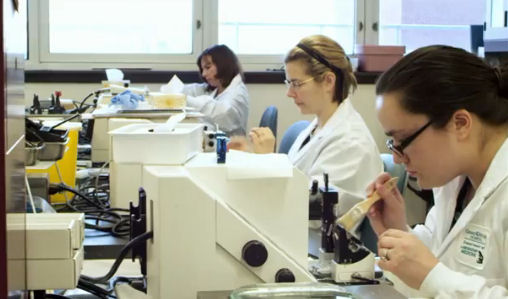


Source: CSMLS

Art and Science of Laboratory Medicine

Twitter: LaboratoryEQAS

Stem cells enable personalized treatment for bleeding disorder

Scientists have shed light on a common bleeding disorder by growing and analysing stem cells from patients' blood to discover the cause of the disease in individual patients. The technique may enable doctors to prescribe more effective treatments according to the defects identified in patients' cells. In future, this approach could go much further: these same cells could be grown, manipulated, and applied as treatments for diseases of the heart, blood and circulation, including heart attacks and haemophilia.

Read more:
Stem cells enable personalized treatment for bleeding disorder


Source: Science Daily

Art and Science of Laboratory Medicine

Twitter: LaboratoryEQAS

Friday, April 5, 2013

Party Shoes for A Laboratorian

Put on you dancing shoes. It´s Friday.


Art and Science of Laboratory Medicine

Twitter: LaboratoryEQAS

Pre-Analytical Variables of Hemostasis Tests

An important element to laboratory testing which is often overlooked and which has only recently begun to be the focus of research and interest is pre-analytical variables. How do we ensure that the sample the laboratory analyses actually reflects the patient’s state? First we must consider what factors may influence the state of the sample and from that we may determine mechanisms to properly regulate these factors.

Read more: 
Pre-Analytical Variables


Source: Practical hemostasis

Art and Science of Laboratory Medicine

Twitter: LaboratoryEQAS

Treatment outcomes following leukemic transformation in Philadelphia-negative myeloproliferative neoplasms

Leukemic transformation (LT) is a rare but fatal complication of Philadelphia-negative myeloproliferative neoplasms (MPNs) for which optimal treatment strategies are not known. At our center, we have adopted a treatment approach for LT where patients within the transplant age group who have a reasonable fitness level are treated with curative intent and offered induction chemotherapy. Subsequently, those who respond and have a suitable donor are considered for allogeneic hematopoietic cell transplantation (HCT). In this study, we evaluated the clinical outcomes of this treatment approach in 75 patients with LT. 

Read more: 
Treatment outcomes following leukemic transformation in Philadelphia-negative myeloproliferative neoplasms


Source: Blood

Art and Science of Laboratory Medicine

Twitter: LaboratoryEQAS

Invisible names - Knitted bacteria

"This, my friends, is precisely why we’ve launched the Invisible Life project. With the help of some über-talented science writers, we’re bringing you a Who’s Who of the most common and interesting microbial characters that live in our homes and on our bodies. We’re sharing the stories of these microbes in the hopes that you’ll better know, appreciate, and see the invisible species (and genera) with whom you share your daily lives."

Read more:
Invisible names


 Source: Your wild life

Art and Science of Laboratory Medicine

Twitter: LaboratoryEQAS

Method and Linearity Validation: A Consensus Approach

Addressing the lack of consensus procedure among regulatory bodies to perform systematic method and linearity validation.

Basic statistics were used to help us identify the best statistics for every situation encountered in the method validation protocols. The mean, the median and the mode were chosen as measures of central tendency. The standard deviation (SD), coefficient of variation (CV) and the F-ratio were selected as measures of variation.

Read more:
Method and Linearity Validation: A Consensus Approach


Source:  ADVANCE for Administrators of the Laboratory

Art and Science of Laboratory Medicine

Twitter: LaboratoryEQAS


Follow "Art and Science of Laboratory Medicine " on:


https://www.facebook.com/LaboratoryEQAS
https://twitter.com/LaboratoryEQAS
https://plus.google.com/100408138227362094524/posts
http://www.pinterest.com/labmed/medical-laboratory-and-biomedical-science/
http://www.linkedin.com/in/jwahlstedt
http://clinical-laboratory.blogspot.com/feeds/posts/default